
- Every serious rebrand runs nine steps in three phases: diagnose, design, deploy.
- An established business takes four to five months from first interview to launched brand system; rollout continues after launch.
- Positioning comes before design. Most failed rebrands started the logo first.
- Rollout is usually the larger cost and the most under-budgeted phase.
- Redirects, listings, legal names and staff briefings decide whether the rebrand loses customers or rankings.
The nine steps, in order
Every serious rebrand passes through the same nine steps. Programmes differ in how much research sits behind each one and how many surfaces the rollout has to reach, which is what moves cost and timeline. The order does not change.
| Step | What happens | What it produces | Who is in the room | Typical duration |
|---|---|---|---|---|
| Phase one · Diagnose (weeks 1 to 8) | ||||
| 01 Diagnostic | The brand scored against the business: analytics, sales pattern, materials, leadership interview | Scorecard, central finding, the two fixes that matter first | Founder or CEO, marketing lead, consultancy lead | 2 weeks |
| 02 Research | Customer and lost-prospect interviews, sales team debrief, competitor and category mapping | Perception gap measured; category map | Clients, prospects, sales, consultancy | 2 to 3 weeks |
| 03 Positioning | Who you serve, what you stand for, why it is worth more; the choices that exclude | Positioning statement, proposition, messaging architecture | Leadership team, consultancy | 2 to 3 weeks |
| Phase two · Design (weeks 7 to 16) | ||||
| 04 Architecture | How the offers, sub-brands and names hold together as the business grows | Brand architecture; naming decisions where needed | Leadership, product or service owners | 1 to 2 weeks |
| 05 Verbal identity | Tone, core copy, the sentences a sales team says on a Tuesday | Messaging guide, core copy set | Marketing, sales, consultancy | 2 weeks |
| 06 Visual identity | Mark, colour, type, imagery, motion, layout; built to hold from sixteen pixels to sixteen feet | Identity system and its rules | Marketing lead, consultancy design team | 4 to 6 weeks |
| Phase three · Deploy (weeks 15 to 20, then ongoing) | ||||
| 07 The system | Guidelines, templates, asset library, the record of what exists | The playbook your team can run without calling anyone | Marketing team, consultancy | 2 to 3 weeks |
| 08 Rollout | Website, sales materials, signage, print, internal launch, sales team briefed on the narrative | The brand in market, everywhere, on the same day where possible | Every team that touches a customer | 2 weeks to launch; months to complete |
| 09 Measurement | The score re-run, the commercial numbers tracked against the baseline from step 01 | Evidence the rebrand worked, or the correction | Leadership, marketing, consultancy | Quarterly |
Durations are for an established business doing substantive work: six to eight weeks of strategy, six to eight of identity and system build, two to three of handover. Phases overlap by design.
Rebrand, refresh, or neither?
Decide this first, because it decides which steps you run. Most businesses that ask for a rebrand need one of the other two.
| Refresh | Rebrand | Neither | |
|---|---|---|---|
| Right when | The positioning still holds and the expression has aged | What you sell, who you sell to, or how the group is structured has changed | The brand is right but applied inconsistently |
| What changes | Identity details, templates, copy | Position, message, architecture, identity, every surface | Templates, ownership, rollout |
| Steps involved | 01, then 05 to 09; 02 to 04 become a review | All nine | 07 and 08 |
| Typical time | Four to eight weeks | Four to five months, rollout continuing | Weeks |
A group that has grown by acquisition has a fourth question: whether its brands should be merged at all. Our guide to brand architecture covers that decision, and rebranding after an acquisition covers the sequence.
Phase one: diagnose
Weeks 1 to 8. The phase that decides whether the rest is worth doing.
Diagnostic
Score the brand against the business before anything changes: analytics, sales pattern, materials, leadership interview.
- Produces
- A scorecard, the central finding, and the two fixes that matter first.
- Typical time
- 2 weeks
- Common mistake
- Skipping it because the problem feels obvious. The brief a business writes for itself describes symptoms; the diagnostic finds the cause.
Research
Interview customers, prospects who did not buy, and the sales team; map competitors and the category.
- Produces
- The perception gap measured, and a category map.
- Typical time
- 2 to 3 weeks
- Common mistake
- Asking only happy customers. Lost prospects explain more about the brand than won ones.
 C-Quest: the positioning reduced to the line the brand leads with
Positioning
Decide who the business serves, what it stands for, why it is worth more, and which claims to stop making.
- Produces
- Positioning statement, proposition and messaging architecture.
- Typical time
- 2 to 3 weeks
- Common mistake
- Trying to appeal to everyone. A position that excludes no one differentiates from no one.
Discovery regularly changes the scope. A business that came in expecting a visual refresh finds its positioning unclear, its team describing the company three different ways in sales meetings, and its closest competitor perceived as more credible despite weaker delivery. None of that appears in a brief. All of it shapes what the rebrand has to do.
Phase two: design
Weeks 7 to 16. Expression follows position.
Architecture
Decide how offers, sub-brands and names hold together as the business grows; settle naming where needed.
- Produces
- The brand architecture and any naming decisions.
- Typical time
- 1 to 2 weeks
- Common mistake
- Leaving it until after the identity is designed, then discovering the logo has to carry four names.
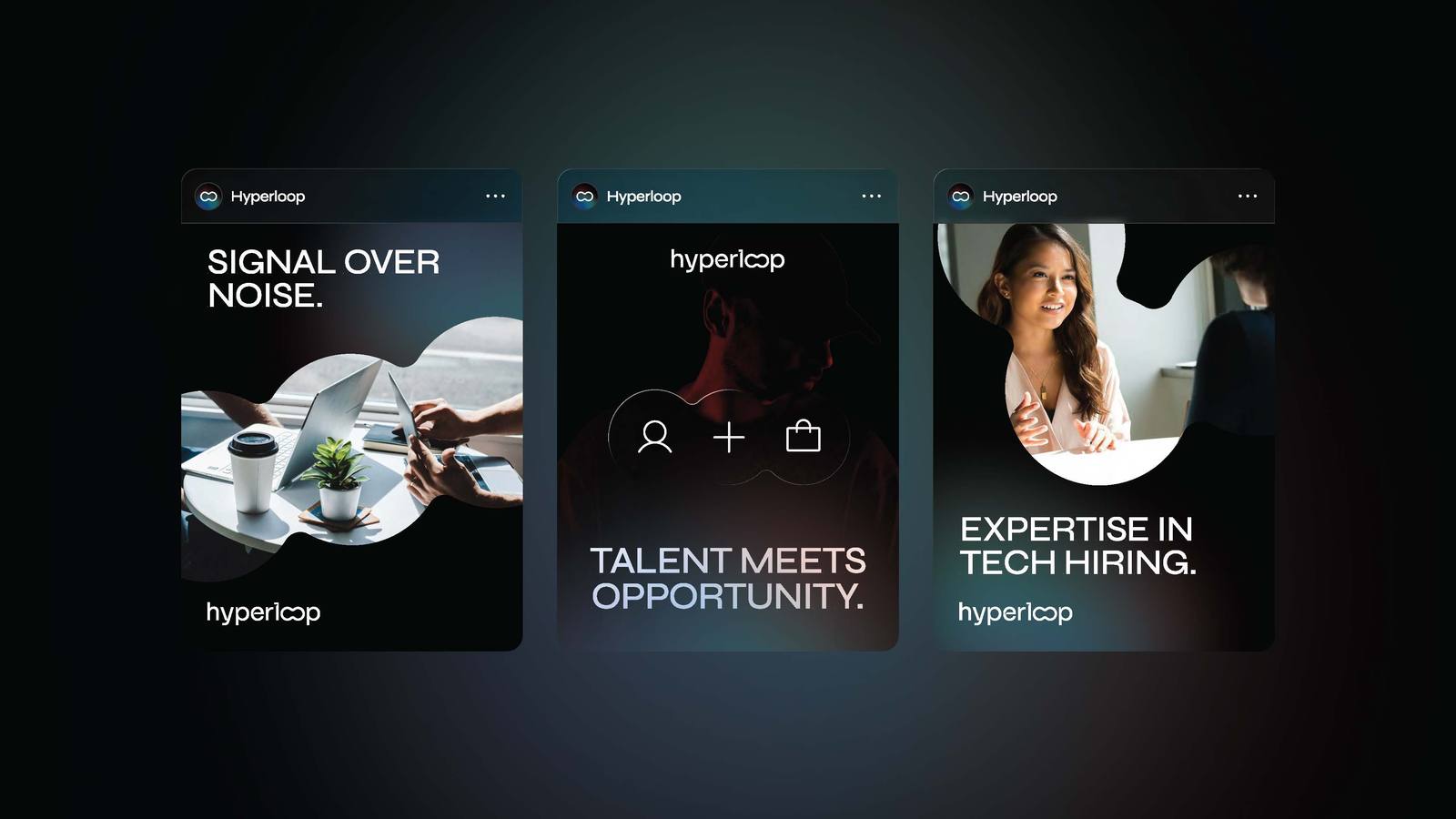 Hyperloop Recruitment: the verbal identity, one line carried across every post
Verbal identity
Write the tone of voice and the core copy: the sentences a sales team actually says.
- Produces
- Messaging guide and core copy set.
- Typical time
- 2 weeks
- Common mistake
- Tone principles without worked examples. People copy examples; they do not apply principles.
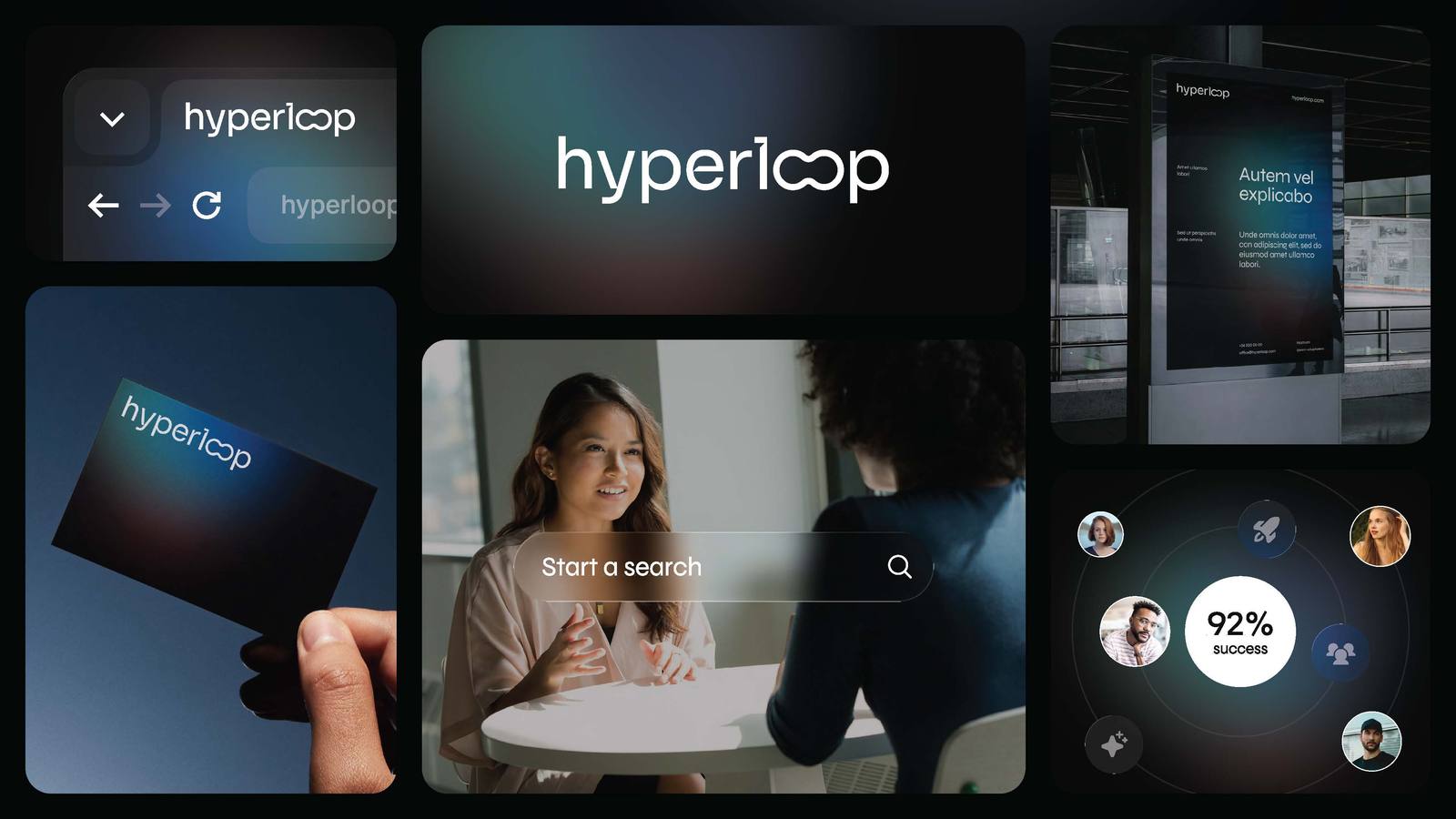 Hyperloop Recruitment: one identity holding from app icon to billboard
Visual identity
Design the mark, colour, type, imagery, motion and layout, built to hold from sixteen pixels to sixteen feet.
- Produces
- The identity system and its rules.
- Typical time
- 4 to 6 weeks
- Common mistake
- Starting before positioning is settled. The design then answers a question nobody has asked.
When the strategy is right, identity work moves faster and with fewer rounds, because there is a clear test for every direction: does it communicate the position, to the right audience, credibly? Without the strategy that test does not exist, and the result is a visual update that looks different and performs the same.
Phase three: deploy
Weeks 15 to 20, then ongoing. The phase most businesses underinvest in.
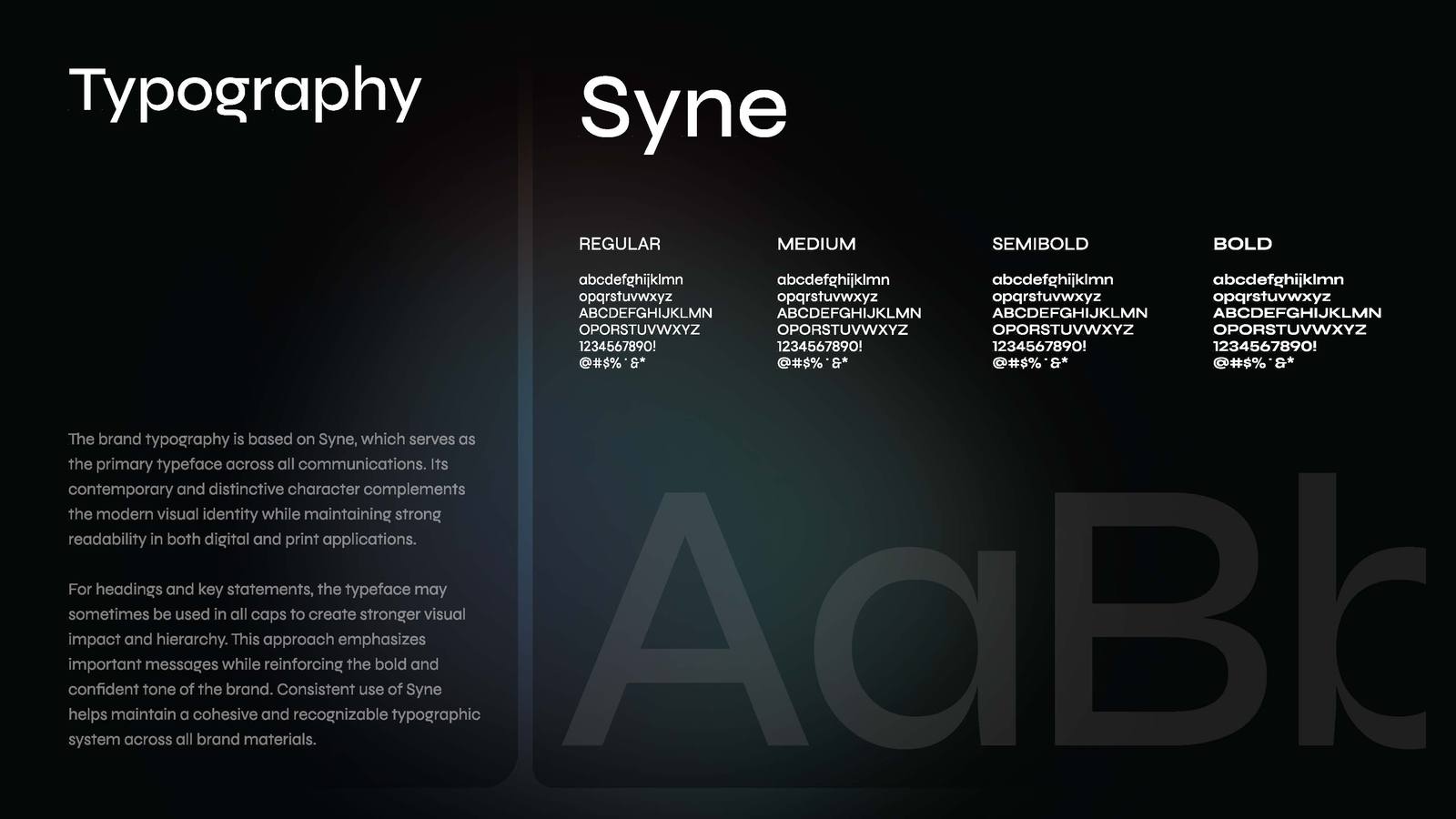 Hyperloop Recruitment guidelines: typography specified, not described
The system
Build the guidelines, templates and asset library, and record what exists.
- Produces
- A playbook the team can run without calling anyone.
- Typical time
- 2 to 3 weeks
- Common mistake
- Delivering rules without templates. A built deck template prevents more errors than a page describing one.
 C-Quest in market: the positioning line from step 03, now on the street
Rollout
Change every surface: website, sales materials, signage, print, listings, internal launch; brief the sales team on the narrative.
- Produces
- The brand in market, everywhere, on the same day where possible.
- Typical time
- 2 weeks to launch; months to complete
- Common mistake
- Budgeting for the design and not the rollout. The new brand reaches the website and nothing else.
Measurement
Re-run the score and track the commercial numbers against the baseline from step 01.
- Produces
- Evidence the rebrand worked, or the correction.
- Typical time
- Quarterly
- Common mistake
- Declaring success at launch. Launch is the start of the evidence, not the end of the work.
Rollout is not the website and the social profiles. It is the pitch deck, the proposals, the email signatures, the signage, the listings and, above all, the people who talk to customers. Internal adoption decides whether the rebrand reaches the market or stays in a folder. A brand that has been properly built is operationally independent six months after launch: the team produces new material without briefing anyone, onboards new people without a workshop, and stays consistent without oversight.
The rebranding checklist
Use it before, during and after. Every item is something we have seen missed on a real rebrand.
The rebranding checklist
Tick items as they are done. Progress stays on this device, and you can email yourself the list with your progress on it. Nothing is sent unless you ask.
Email me this checklist, with what is done and what is outstanding.
How to rebrand without losing customers, rankings or staff
Customers. Research first, so you know what they value before anything changes, and keep the equity the research finds. Tell them what changes and what stays, in that order, before launch rather than after. Launch on one date; a rebrand that arrives in fragments looks like two companies.
Search rankings. Map every retired URL and domain to its replacement with a permanent redirect, page for page, before launch, and keep the old domains registered. Rename each Google Business Profile listing rather than deleting and recreating it, so reviews and ranking stay attached. Check the searches the old name ranked for, and carry those pages across.
Legal and regulated names. A trading name can change the same day; a legal name changes at the registrar and appears on contracts, invoices and regulator records. Decide which is changing and schedule each notice period.
Staff. Brief the people who talk to customers before customers see anything. Give the sales team the narrative in the words they will use, not the positioning document. A rebrand the team cannot explain in a sentence will not survive its first client meeting.
Where rebrands go wrong
- Design before positioning. The identity answers a question nobody asked, and gets redone within two years.
- No budget for rollout. The website changes and nothing else does, so the market sees two brands.
- Research with only happy customers. The findings confirm what leadership already believed.
- No owner after launch. Guidelines nobody owns stop being followed within a year.
- Success declared at launch. Nothing is measured, so nothing is learned.
Our guide to why rebrands fail goes further, and rebranding ROI covers how to measure it.
From the work
Positioning did the work. A UK home services business described itself as professional, reliable and affordable, as every competitor did. The strategy work found a specific audience, a specific problem it solved better than anyone in its market, and a way to say it nobody else was using. We helped grow the business from £300k to £2.18M in revenue, 118% above target. The identity did not cause that; the positioning did.
Inside before outside. The Hyperloop Recruitment rebrand ran working sessions with the founders to embed the new language in how the team talked about the business, before any external launch. The brand worked in market because it was understood internally first.
How Pivitt runs the process
Pivitt runs the nine steps as the Brand Transformation Programme, with the Brand Alignment Diagnostic as step 01. If you want to know where your brand is falling short before committing to a full process, the Diagnostic runs that analysis over ten working days. If you already know what needs to change, a discovery call is the next step.